
At the centre of the circle
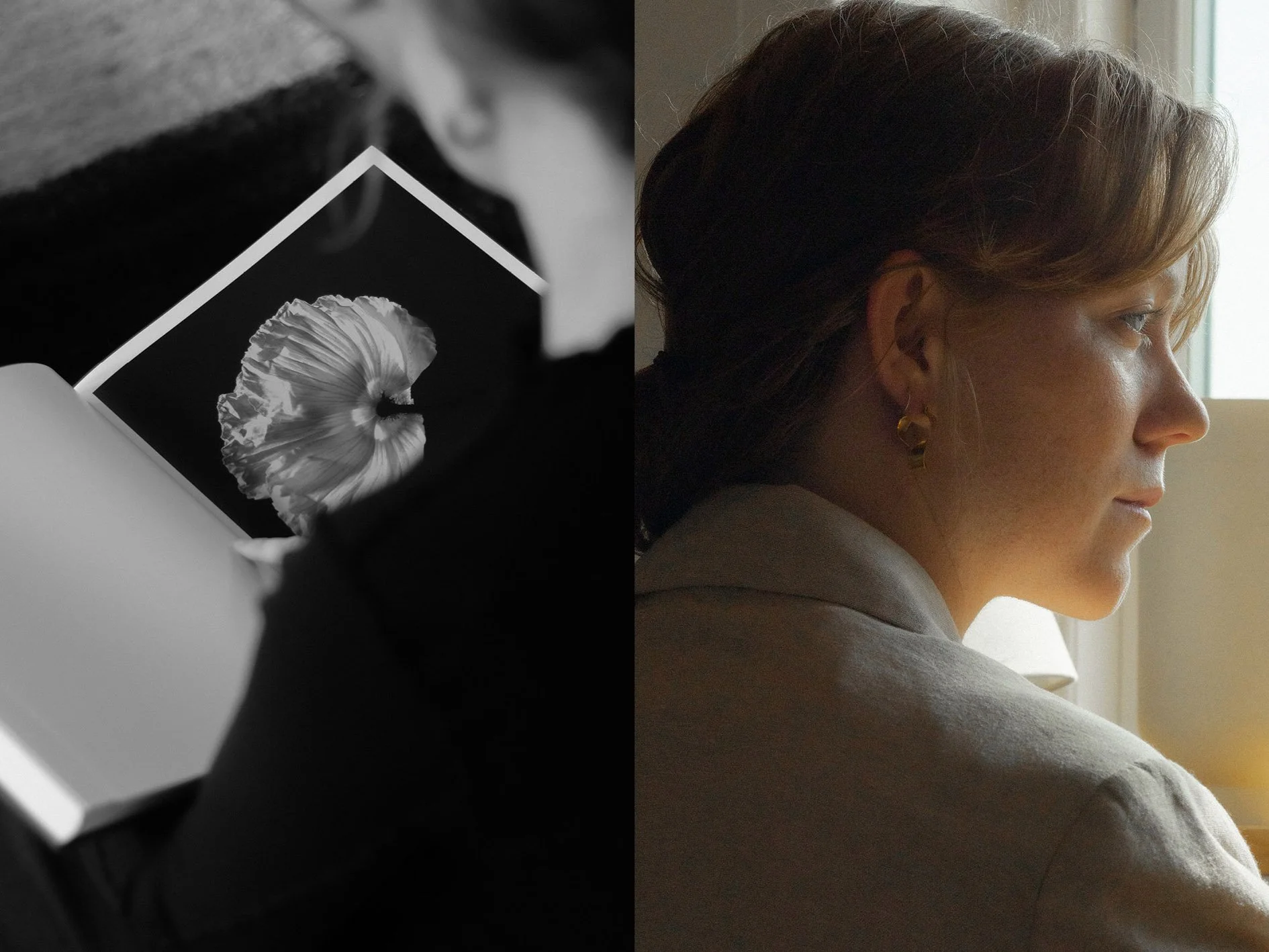
Photos of Rebecca Norberg, architect and founder of Relief.
Image courtesy of Relief.
While speed and scale continue to dominate much of the creative economy, a quieter countercurrent that values long-term thinking, cultural memory, and outputs that endure is gaining popularity—not as a vehicle for constant consumption, but as a framework for care. Alison O’Byrne met with Rebecca Norberg of Scandinavian design studio, Relief, to find out more and compare notes on how we approach sustainability.
For design studios like Relief, led by creative director Rebecca Norberg, sustainability is not a standalone value but a structural one. It sits within how projects are conceived; who is commissioned; and how stories are told. Following a recent period of transition, Rebecca has refocused the practice from B2C to B2B design commissions, hospitality, and cultural projects. The shift is less a departure than a refinement: a move away from the transactional and towards the relational.
Rebecca shares that, “It felt like a moment to pause and really ask what the practice should become. Relief is about focusing on what we do best: design commissions and long-term projects.”
This emphasis on longevity resonates strongly with ALHAUS’ own editorial approach as a content-led practice interpreting strategy through storytelling, design, and research-driven narratives that live beyond campaign cycles.
The goal is not immediacy, but resonance. We’re not interested in chasing numbers quickly. for us, sustainability is also about long-term engagement and content that has value over time, not just for a moment.
Good content should be able to live many lives.
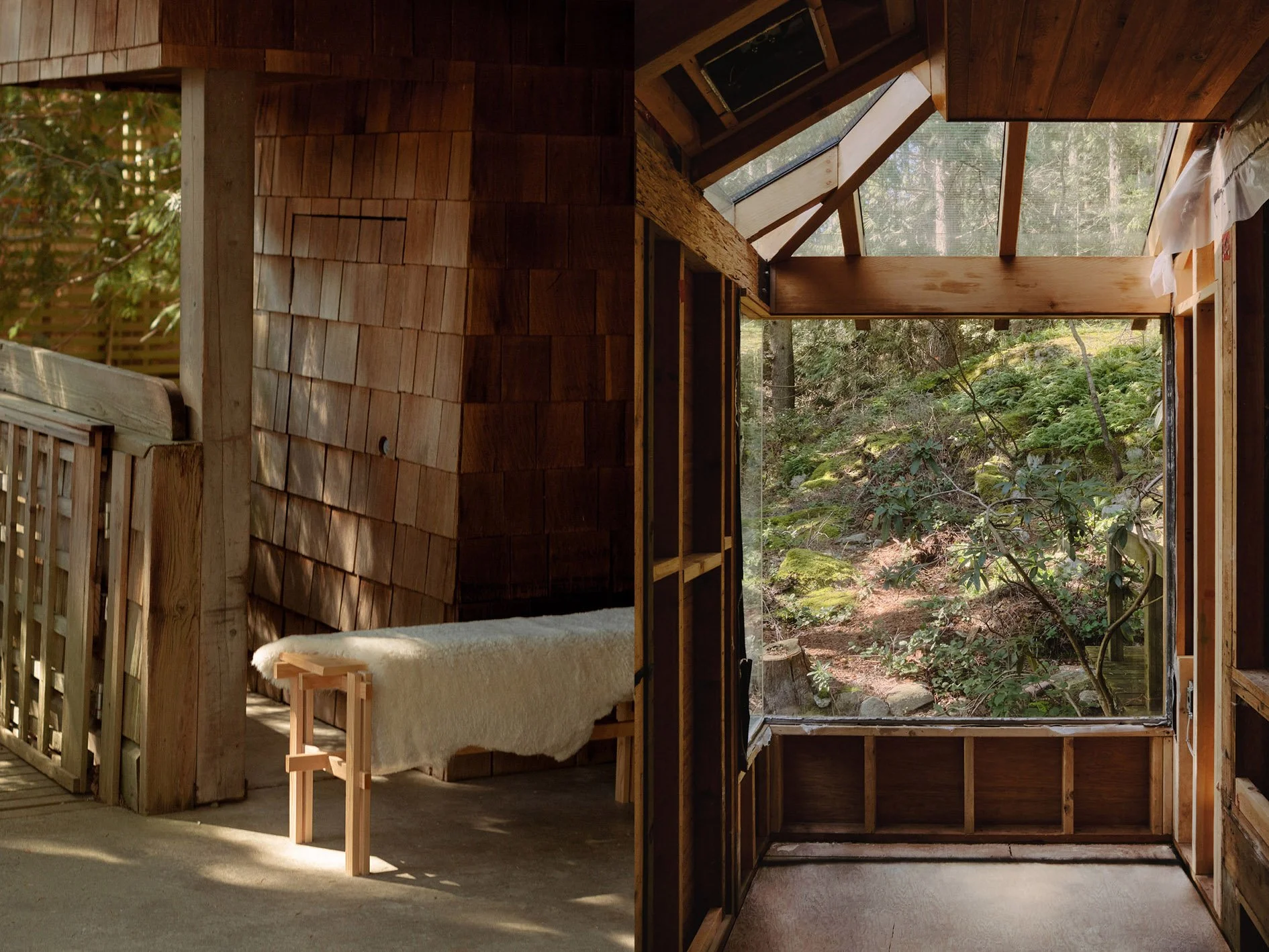
Common Dwells bench design and renovation of West Coast Modern home.
Photography by Agustina García del Río and Alex Lesage.
“Good content should be able to live many lives.”
Segmented audiences, shared values
One of the key themes emerging from our conversation was the importance of segmented communication—acknowledging that sustainability is not a single message delivered uniformly, but a series of dialogues shaped by audience, context, and intent.
Rebecca’s experience at the Danish Architecture Center, where architects, tourists, policymakers, and students all intersected, underscores the challenge. When everything is for everyone, meaning dissolves. Sustainable communication, like sustainable design, requires precision.
“Design isn’t just about objects, it’s about relationships.”
ALHAUS’s model reflects this understanding: working across B2B and B2C, across print and digital, across institutions and individuals but always with a core narrative that can flex without fracturing. This is sustainability as editorial practice: making more from less by designing systems that allow content to travel, adapt, and accrue value over time.
A core principle for us is reuse. One piece of content should be able to live in many places—social, website, magazine, newsletter—without losing its meaning.
Most of our clients aren’t speaking to one audience. They’re speaking to many—B2B, B2C, cultural, commercial—and each one needs a different entry point into the same story.
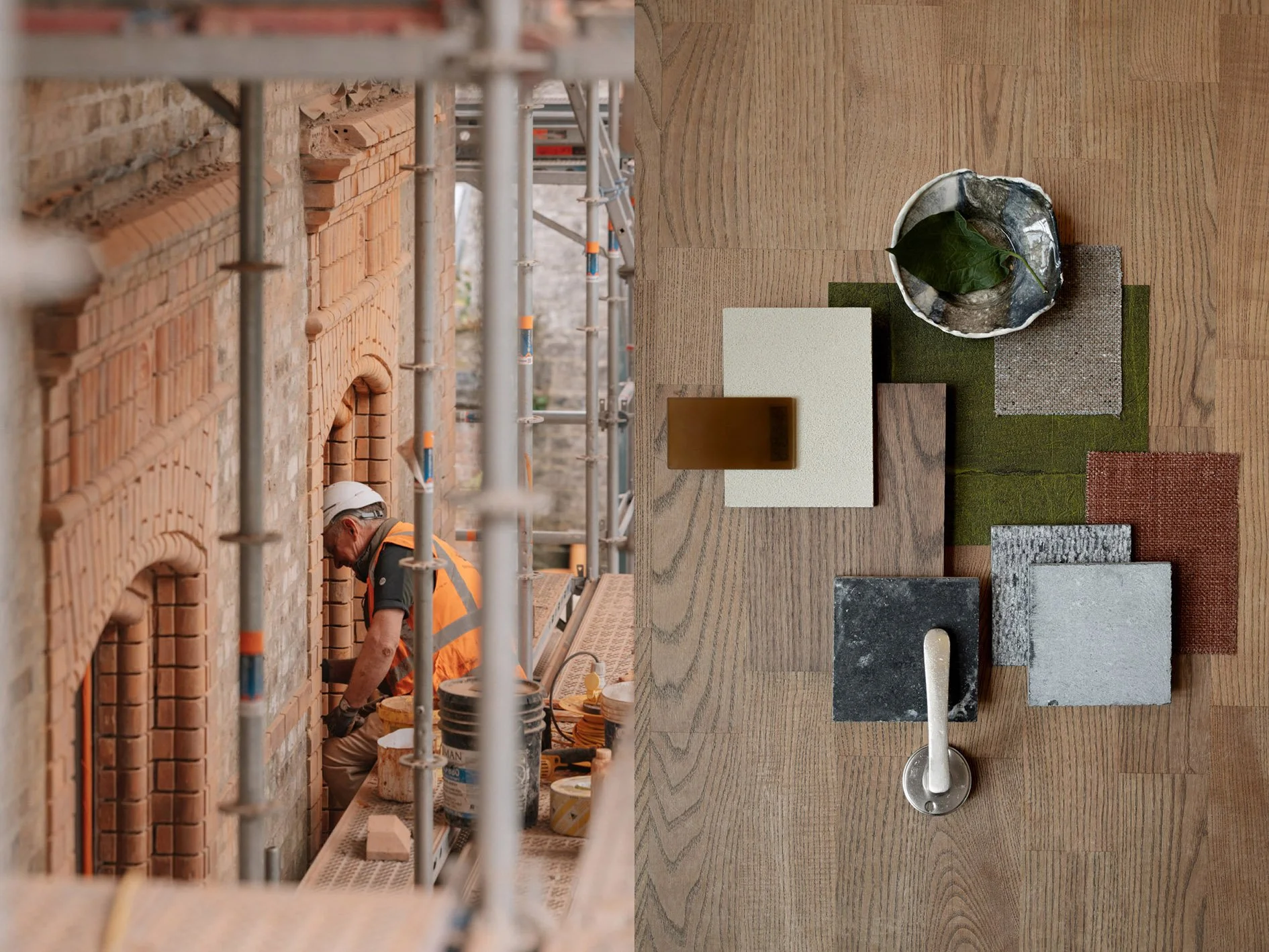
Ómós Guesthouse facade restoration in progress and material board.
Photography by Shantanu Starick and Relief.
Designing with place in mind
We’ve been exploring this idea for some time now (see A sense of place ALHAUS 2020) but nowhere is it more evident than in ÓMÓS, relief’s hospitality project currently underway in Abbeyleix, County Laois—a commission that sits at the intersection of sustainability, heritage, and contemporary Irish design.
Set on the Vicarage estate beside a mill pond, the project includes a 16-room guesthouse in the restored Millbrook building and a new restaurant that looks both backwards and forwards—grounded in Irish culinary heritage while imagining its future. The project is being developed in collaboration with Chef Kuhan, whose vision for an Irish-led food culture anchors the wider narrative.
For Rebecca, ÓMÓS is not simply a building project; it is an act of cultural alignment. Irish designers and makers are being actively commissioned, not as an aesthetic gesture, but as a way of embedding local knowledge into the fabric of the place.
Sustainability here is spatial and social. It is about who gets invited into the process, whose work is valued, and how the story of a place is allowed to unfold rather than be overwritten.
As she says, “ÓMÓS is about bridging the old and the future. It’s rooted in Irish heritage, but it’s also forward-looking in how it commissions designers and tells its story.”
A shared practice model
Underlying both studios’ approach to sustainability is an acceptance that the way creative work happens has changed. Lean core teams, expansive external networks, and fluid collaboration models are no longer exceptions, they are the new normal.
Rebecca agrees, “For ÓMÓS, it felt important to actively seek out Irish designers and makers — through research, networks, and social media — and give them a meaningful role in the project.”
Rather than weakening creative culture, this distributed model can strengthen it. External collaborators bring fresh perspectives; knowledge circulates rather than stagnates. It is, in many ways, a circular economy of ideas.
“Shifting away from e-commerce allowed us to continue the spirit of lifting designers, but in a way that feels more sustainable and aligned with how we actually work,” Rebecca continues.
This way of working mirrors sustainable thinking: resilience through diversity, adaptability through connection, strength through decentralisation.
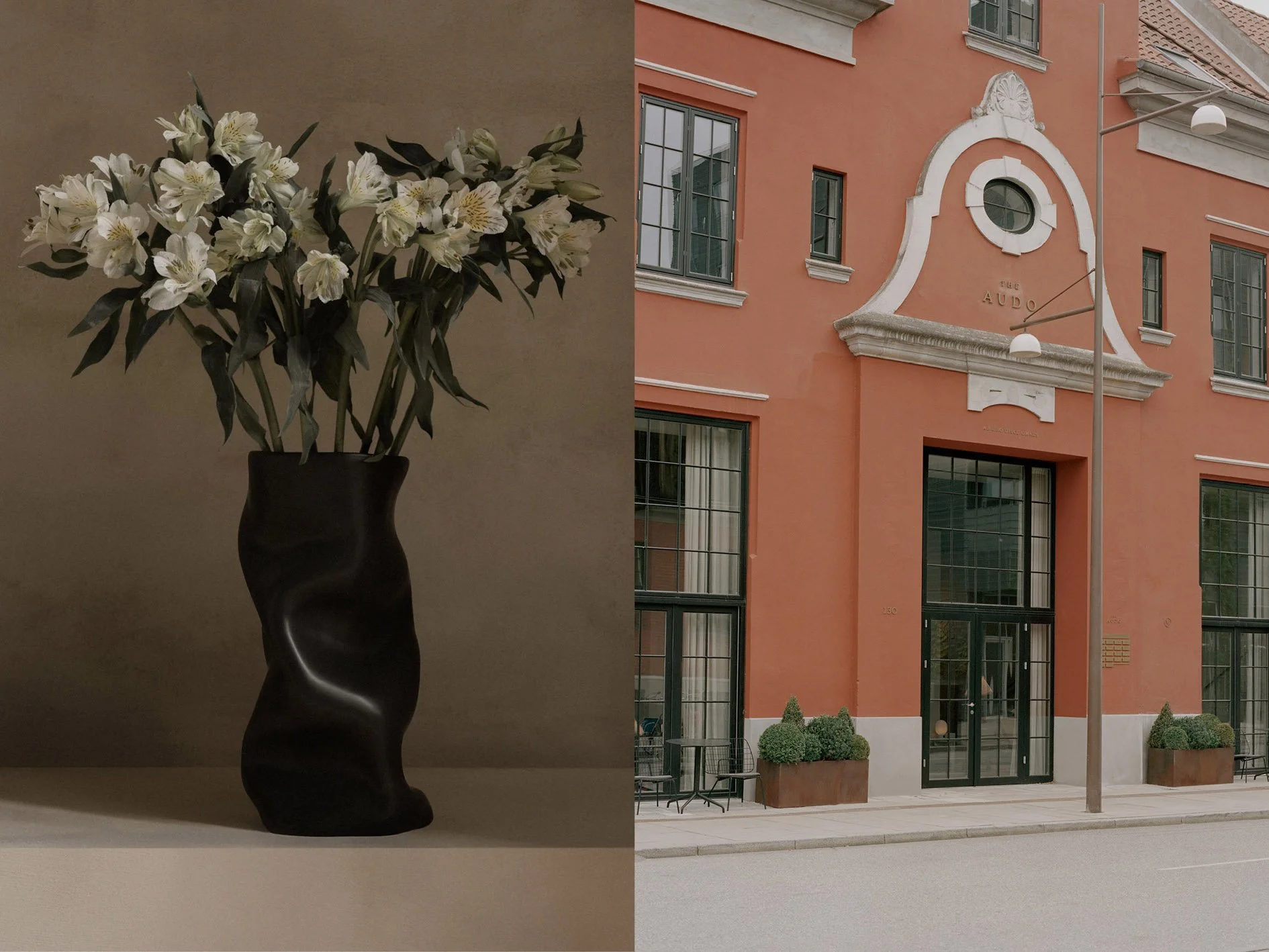
Audo Copenhagen design collaboration and Audo House.
Photography by Audo Copenhagen and Brian Buchard for Anniversary Magazine.
Sustainability as cultural memory
What emerged most clearly from our conversation is a shared belief that sustainability is inseparable from memory. From ALHAUS’ previous work on Irish cultural heritage to Relief’s interest in transformation projects, there is a recurring attention to what already exists—and how it can be reinterpreted with care.
At ALHAUS, we’re really drawn to projects that deal with heritage and memory: places and stories that already exist and need to be interpreted carefully rather than overwritten.
In the same way for Rebecca and her team at relief.gallery, sustainable design is not always about the future. Sometimes it is about listening to the past and allowing it to inform what comes next.
“A lot of our work sits between transformation and new build. That tension is interesting: it’s where sustainability, storytelling, and design really meet,” Rebecca explains.
In this sense, sustainability becomes less about solutions and more about posture: a willingness to slow down, to look holistically, and to act with intention. It asks creative practices to position themselves not as drivers of consumption, but as custodians of meaning.
And perhaps that is the quiet shift now underway—one where design, content, and culture are no longer chasing but building relevance that lasts.
“A lot of our work sits between transformation and new build. That tension is interesting: it’s where sustainability, storytelling, and design really meet.”
About Relief:
Relief is a multidisciplinary design studio rooted in Scandinavian clarity and dedicated to shaping cultural and commercial environments with enduring impact. Working across landscape, architecture, interiors, design, and branding, the studio delivers holistic projects where every dimension is addressed as a unified whole.